
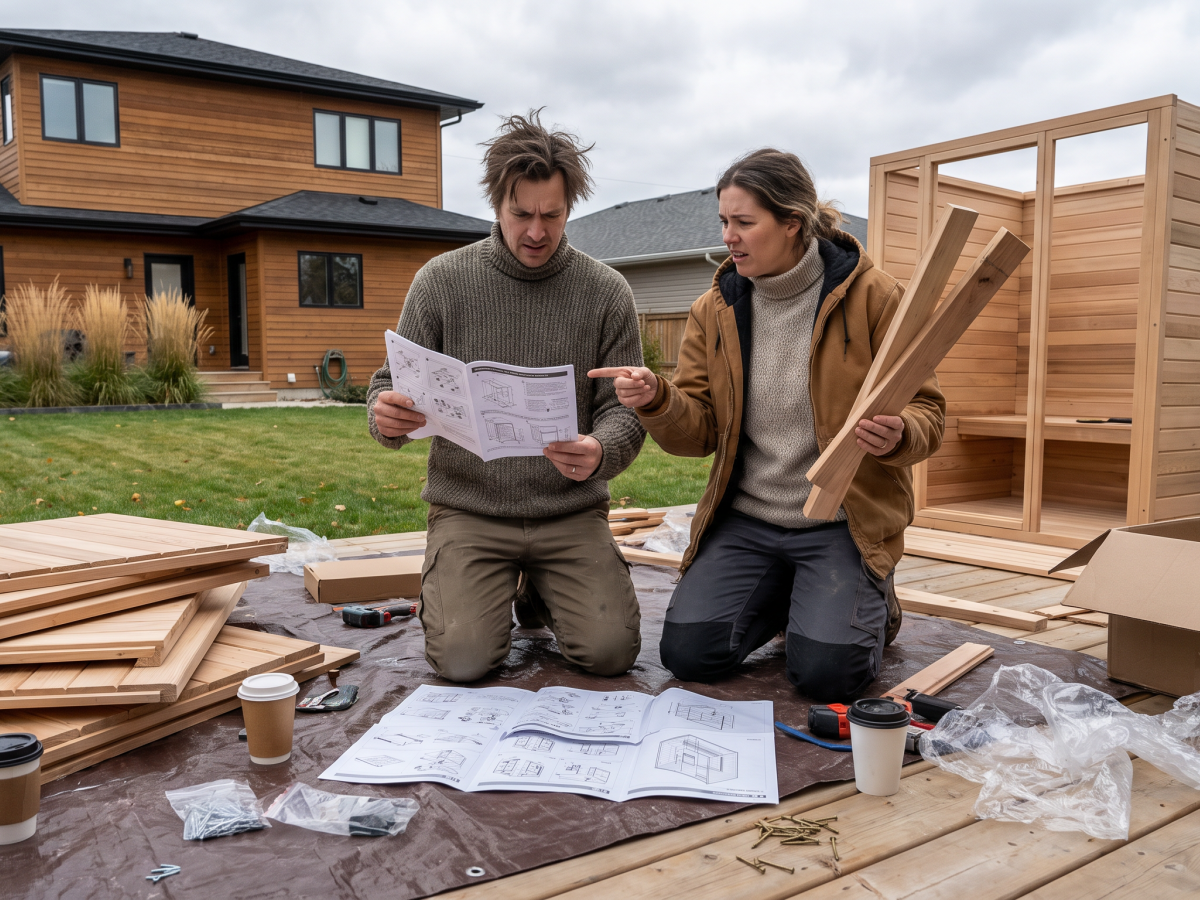
A sauna kit looks like a good deal in the photos: fixed price, fast delivery, straightforward assembly. For the right situation, it can be. If you've got a sheltered yard, a simple use case, and you're comfortable doing your own maintenance, a kit can make sense.
Price isn't really what separates a kit from a custom build, though. What separates them is what sits behind the finished surface: insulation, sealing, moisture control, ventilation, wood quality, exterior detailing, and how serviceable the thing is ten years in. In Manitoba, those details carry more weight than most buyers expect going in.
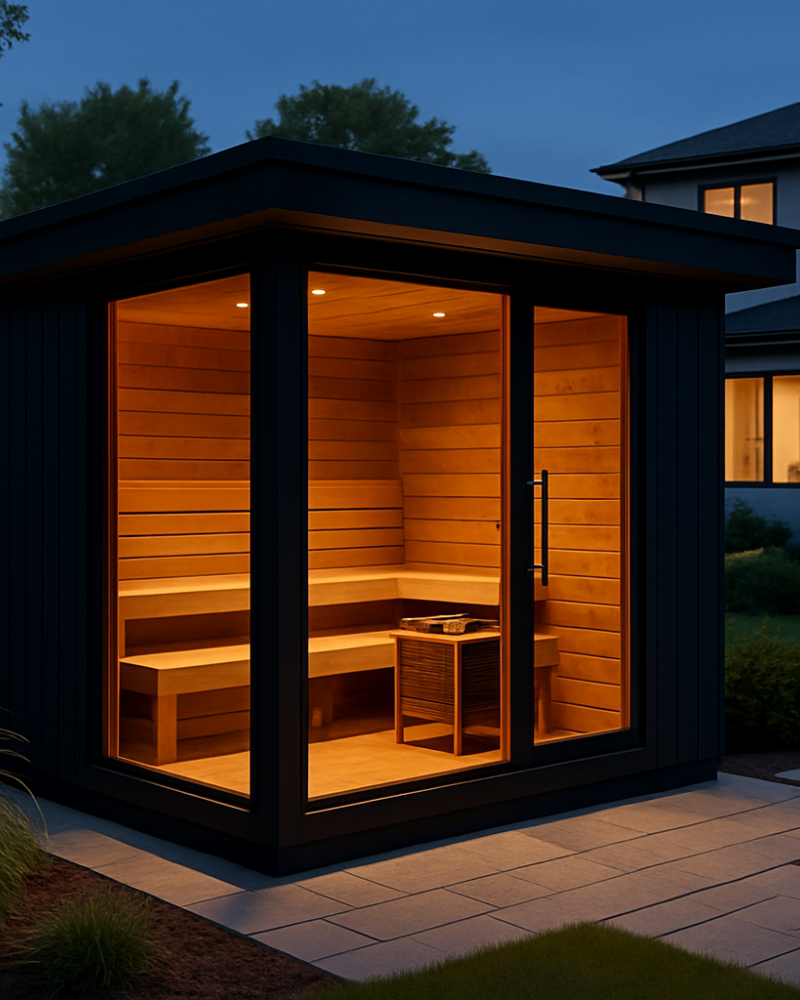
Kits sell the look. Custom builds start with the assembly.
A kit has to work across many buyers, many climates, and many skill levels, so it leans on standard dimensions, standard materials, and a fixed layout. That's not a flaw, just a different starting point.
A custom sauna starts with the property itself: the climate, the heater, the number of users, the foundation, the views, the access path, the electrical run, and how exposed the site is. That changes what gets built. A proper wall and roof assembly includes insulation sized to the room, a foil vapor barrier with taped seams, an interior air gap, tongue-and-groove interior detailing, planned ventilation, durable exterior cladding, flashing, and a rainscreen behind the siding.
None of that is cosmetic. It's what decides whether the room holds heat and sheds moisture correctly, session after session, through a Manitoba winter. The wood you see on the inside is one layer. The system behind it is what does the actual work.
Kits can work, but prairie winters expose the shortcuts
A kit is a reasonable choice for a smaller budget, a sheltered cottage setting, or someone testing whether sauna bathing fits their life before committing to a bigger build.
Where kits start to struggle is winter. A prairie winter brings snow load, wind, freeze-thaw movement, deep cold, and moisture cycling, and that finds every weak point fast. Thin walls lose heat, which makes the heater work harder to compensate. Weak doors leak air. Cheap fasteners stain or fail within a few seasons, and basic exterior detailing lets water sit where it shouldn't, which matters once that water freezes. Limited ventilation can leave the room feeling stale or slow to dry between uses.
None of that shows up in the first photo. It shows up after a winter of actual use. A custom build lets you control the foundation approach, roof system, wall assembly, insulation, exterior cladding, ventilation path, door quality, and heater location from the start. A kit is usually a product. A custom sauna is a building.
The real cost is ownership, not the sticker price
The cheapest sauna up front isn't always the cheapest to own. Total cost includes site prep, assembly, electrical work, heater sizing, repairs, maintenance, energy use, replacement parts, and how long the sauna stays desirable, including how a future buyer sees it. A basic kit sitting loosely on a simple base can read as movable personal property rather than part of the home. A well-built custom sauna, integrated into the landscaping and matched to the property, tends to read as permanent.
Repairability matters here too. A thoughtfully built custom sauna is easier to live with over time: floor sections can lift out, cladding gets detailed for access, ventilation can be adjusted, and benches get built to be serviced rather than replaced. With a kit, once a weak point develops, you're often stuck adapting a standardized product that was never designed around your specific site.
The Real Cost of a Sauna in Winnipeg: Kit Price vs. Completed Project
One of the most common mistakes buyers make is comparing a custom sauna quote to the advertised price of an online kit. The two numbers aren't measuring the same thing.
A kit price is rarely the finished project price. It usually doesn't include the base, freight, unloading, assembly, roofing upgrades, electrical work, permits, site access, foundation preparation, weather protection, ventilation improvements, warranty service, or landscaping restoration once the work wraps up.
A $9,000 online sauna can turn into a $16,000 to $22,000 completed project once all of that gets added in, and the homeowner can still end up with something that wasn't designed for their property, their climate, or how they'll actually use it.
The kit number looks good online because it's only one piece of the project. A sauna still has to arrive, get moved into place, assembled, connected, protected from the weather, inspected where required, and made usable in an actual backyard. In Winnipeg, each of those steps carries real cost. Site access can be tight enough to complicate delivery. Electrical runs add up fast. Foundation work has to account for frost and drainage, not just a flat pad. Snow, wind, and freeze-thaw aren't occasional here, they're the default, so weather protection isn't optional. A sauna that can't dry properly after use because of weak ventilation becomes a maintenance problem within a year or two.
The number worth comparing isn't "what does the sauna cost." It's what the finished, durable, usable project costs once it's sitting in your yard doing what it's supposed to do.
At Turon Saunas, we walk clients through the full project before they decide anything. A custom build costs more upfront, but that number already includes planning, structure, assembly, exterior detailing, heater coordination, and ventilation. It's a different experience than buying a kit and finding the rest of the project one invoice at a time.
Which one fits you
A kit makes sense if you want a lower upfront cost, a simpler purchase, and you're fine with standard materials and a fixed layout. A custom build makes more sense if cold-climate performance, long-term durability, comfort, and property integration actually matter to you, and you want one builder responsible for the whole system instead of a box of parts.
What you're actually hiring a custom builder for is everything behind the walls, under the floor, above the ceiling, and outside the cladding, working together instead of separately.
At Turon Saunas, we build for Manitoba conditions: structure, insulation, foil barrier, air gap, tongue-and-groove interior work, ventilation, heater sizing, exterior cladding, flashing, and rainscreen detailing, all worked out before the sauna is finished. Once the walls are closed, that work becomes invisible. It's also the work that decides whether the sauna still performs in ten years.
