
How Long Does a Sauna Take to Heat Up? And How to Speed It Up
Most properly sized traditional electric saunas take approximately 30 to 60 minutes to become ready. An outdoor sauna in a Manitoba winter will often fall near the upper end of that range and may take longer during extreme cold.
Wood-burning heat is less predictable. Firewood quality, chimney draft, insulation, stone mass and firing technique can move the result substantially. The honest answer isn't one universal number. It's a performance range based on the complete sauna.
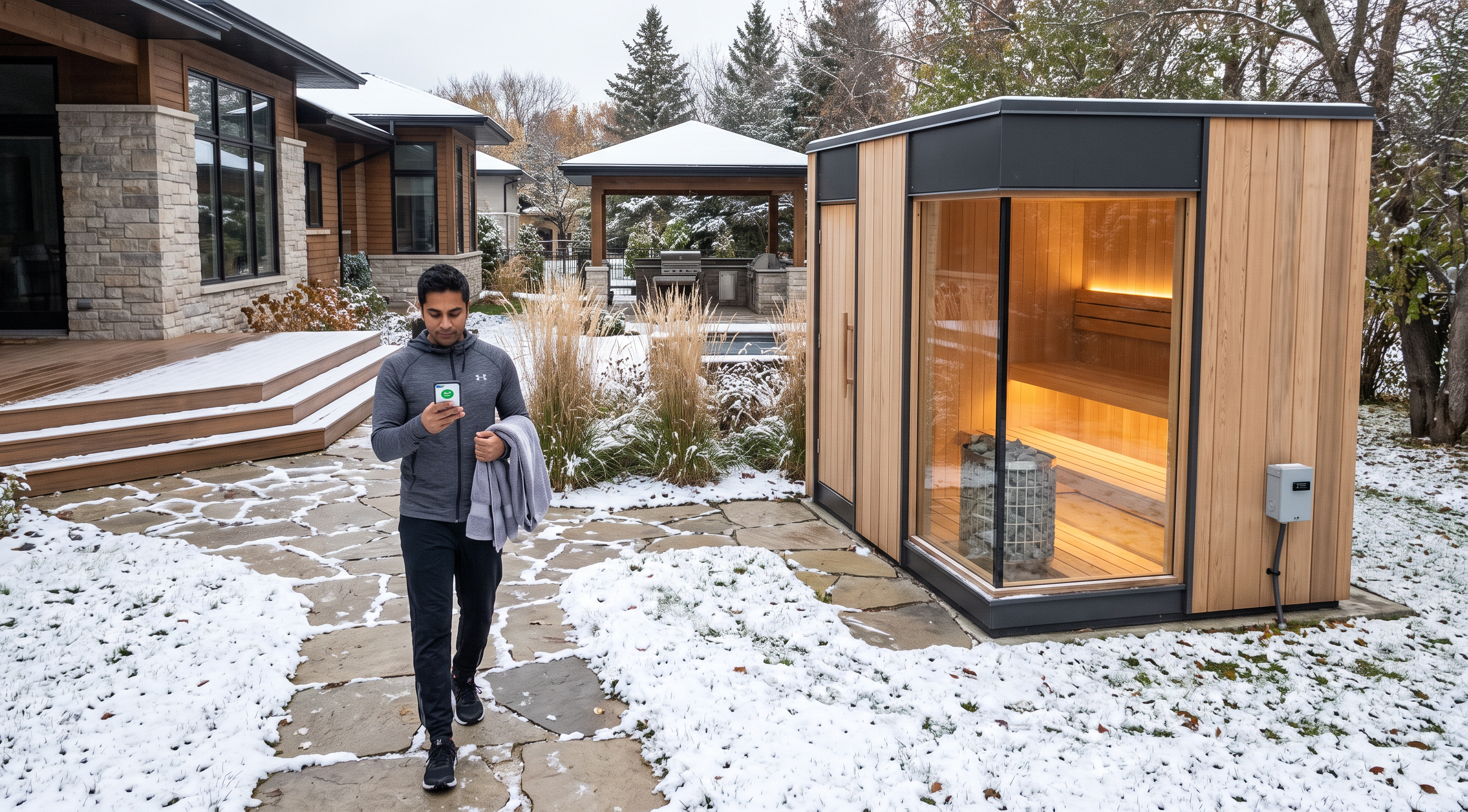
Direct answer
For a well-insulated traditional sauna with a correctly sized electric heater, use 30 to 60 minutes as a realistic planning range. Harvia says the desired temperature is commonly reached in approximately 35 to 45 minutes, while Finnleo gives a broader 30-to-60-minute range depending on the heater, room size and outside temperature.
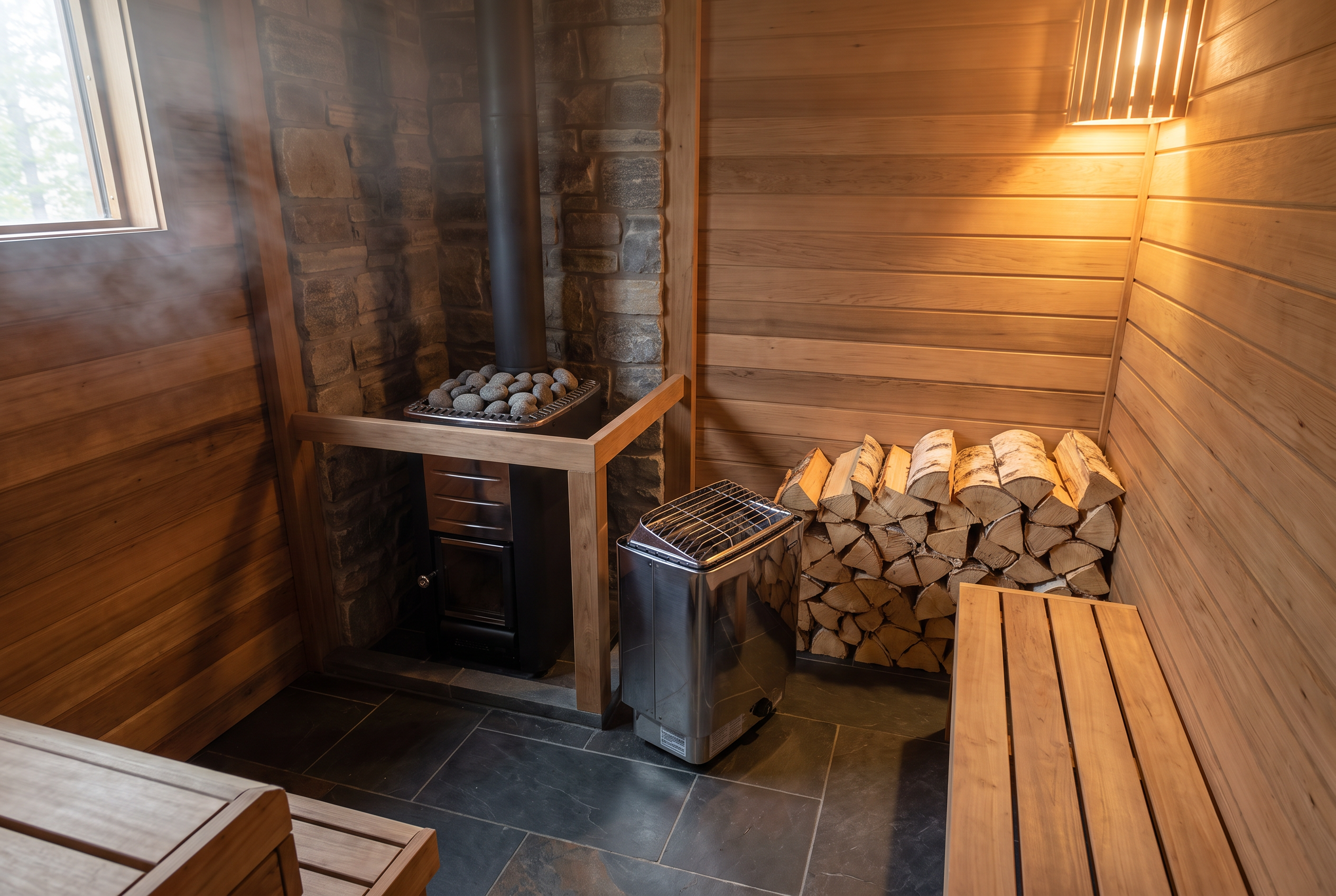
For a wood-burning sauna, plan for at least an hour and allow additional time until you understand how the particular stove, chimney, stones and room behave. Some high-stone-mass wood heaters and cold starts can take substantially longer. Harvia specifically avoids publishing one standard wood-heater warm-up time because insulation, ventilation, chimney draft, surface materials and firewood all affect it.
Typical sauna heat-up times
Sauna type: Traditional electric sauna
Practical planning range: Approximately 30 to 60 minutes
Important qualification: Outdoor winter starts may take longer
Sauna type: Wood-burning sauna
Practical planning range: Allow at least about one hour
Important qualification: Draft, wood, firing technique and stone mass create greater variation
Sauna type: Large-stone-mass heater
Practical planning range: Often slower initially
Important qualification: Usually selected for softer, longer-lasting heat rather than minimum warm-up time
Sauna type: Small-stone-mass heater
Practical planning range: Often faster
Important qualification: May produce a sharper heat and different steam character
The range should never be treated as a guarantee. A compact indoor sauna beginning at room temperature isn't comparable to an outdoor building beginning at -25°C. A high-output heater with 30 kilograms of stones isn't comparable to a large pillar heater holding 100 kilograms or more. The desired bathing temperature matters as well. Reaching 70°C is different from waiting for 90°C.
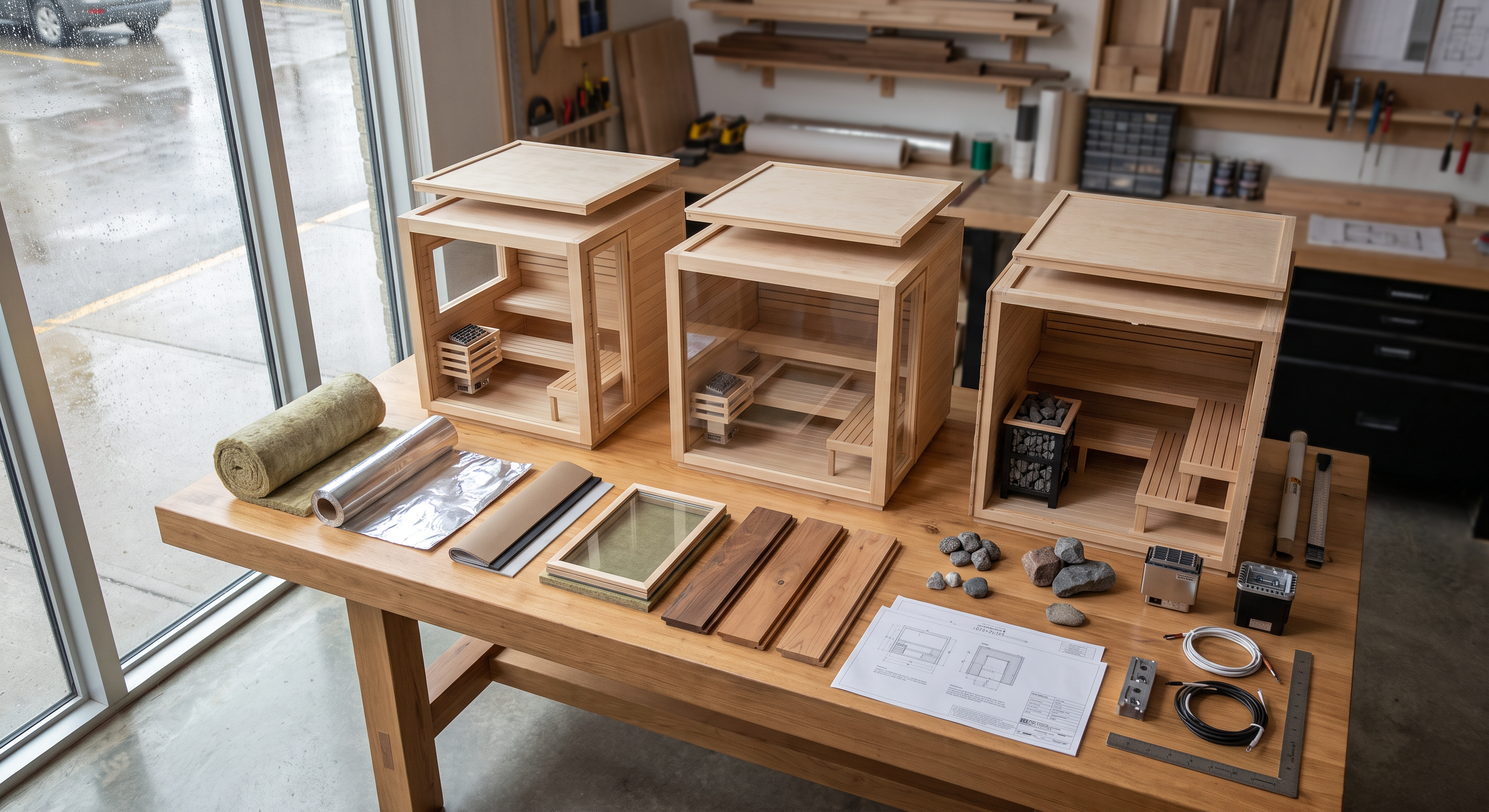
What does "ready" actually mean?
A sauna thermometer reaching the target number doesn't always mean the sauna is fully ready. A proper traditional sauna needs hot air, heated benches and interior surfaces, stones that can evaporate water effectively, reasonably stable room temperature, comfortable heat at the upper bench, and enough stored energy for good löyly.
Finnleo distinguishes between merely warming the room and properly preheating the rocks, noting that traditional sauna warm-up depends on both. Two heaters can show the same thermometer reading while producing very different experiences. One may warm the air quickly but leave the stones underheated. Another may take longer but provide softer, more sustained steam once the stone mass is ready.
The real measure isn't how soon the controller shows 80°C. It's when the room, benches, and stones become ready for the experience the homeowner actually wanted.
Electric sauna heat-up time
Electric heaters are generally more predictable because the power output, thermostat and room requirements can be calculated in advance. Harvia says a conventional electric heater typically runs at full output during the initial 30 to 40 minutes, and in its example of a family sauna, the room is heated for approximately one hour before bathing begins.
A well-matched electric sauna may be ready in 35 to 45 minutes under favourable conditions. A larger outdoor room, more glass, a high stone mass, or a deep-winter start can push that toward an hour or longer.
Electric heat also makes scheduled preheating easier. Compatible systems can let the owner choose a start time, set a target temperature, monitor the room, and get a notification when it's ready. That convenience can be worth more than shaving five minutes off the physical heat-up time. The sauna still needs time to warm. The owner just doesn't have to spend that time waiting beside it.
Wood-burning sauna heat-up time
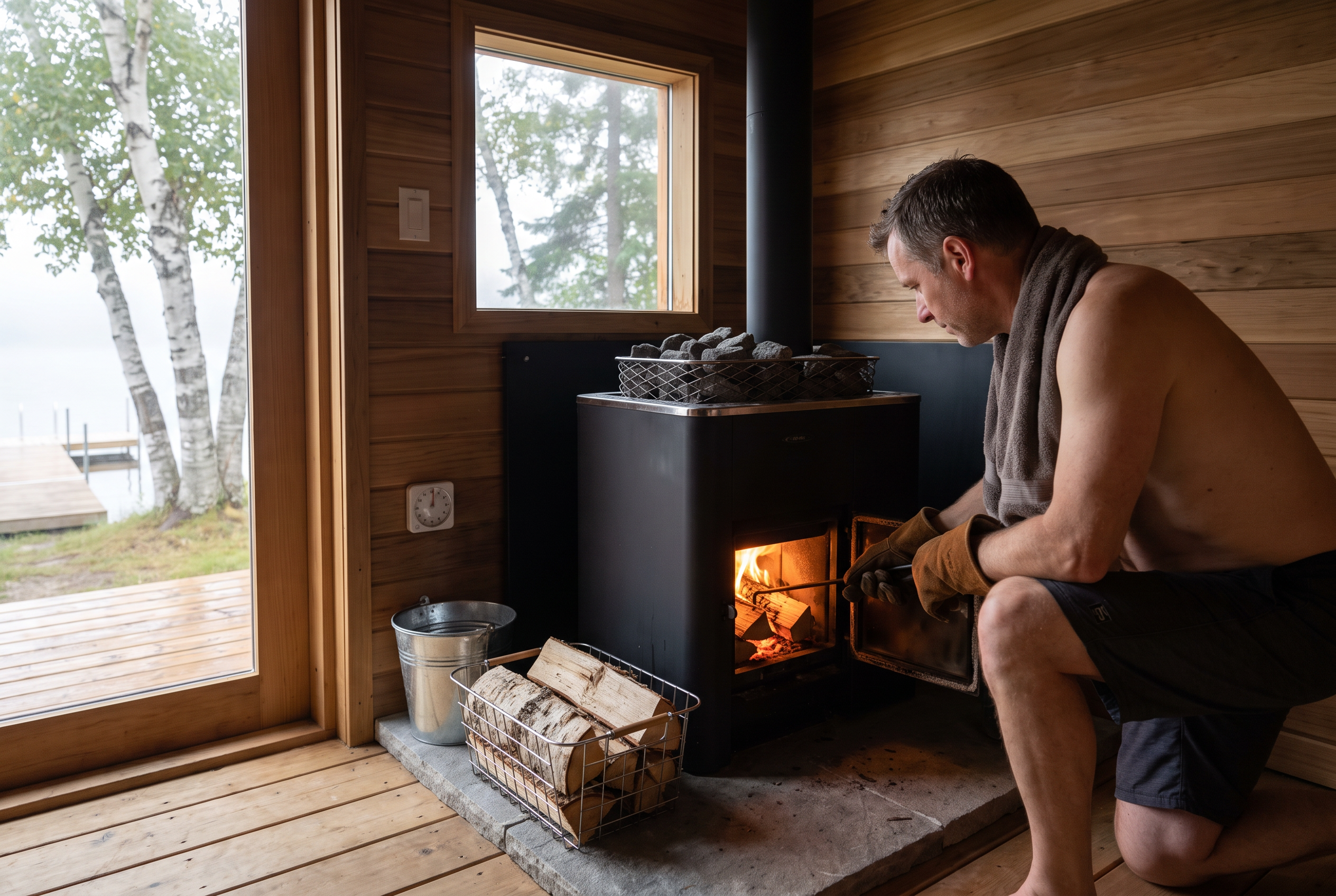
Wood-burning saunas create a more hands-on heating process. The owner has to confirm the chimney is drafting properly, prepare dry firewood, light the fire, control combustion air according to the stove instructions, add wood at the correct time, allow the stones to store heat, and monitor the stove throughout the burn.
A HUUM HIVE Flow manual illustrates the variability clearly. Its firing sequence shows approximately 50 to 60 minutes for the initial firewood batch before another batch is added, followed by a further 35-minute interval if additional heat is required. That's a model-specific firing sequence, not a universal sauna warm-up promise.
HUUM also warns that some wood-burning installations can take up to three hours when the ambient temperature is below 10°C, particularly where a large stone mass must heat from the centre outward. That's not typical of every wood stove, but it shows why a single advertised number is unreliable. A smaller, well-insulated sauna with a correctly selected wood stove and good draft may become usable much sooner.
The important point is that wood heat has a wider performance range and requires active participation. It can't be safely started remotely or left unattended while burning.
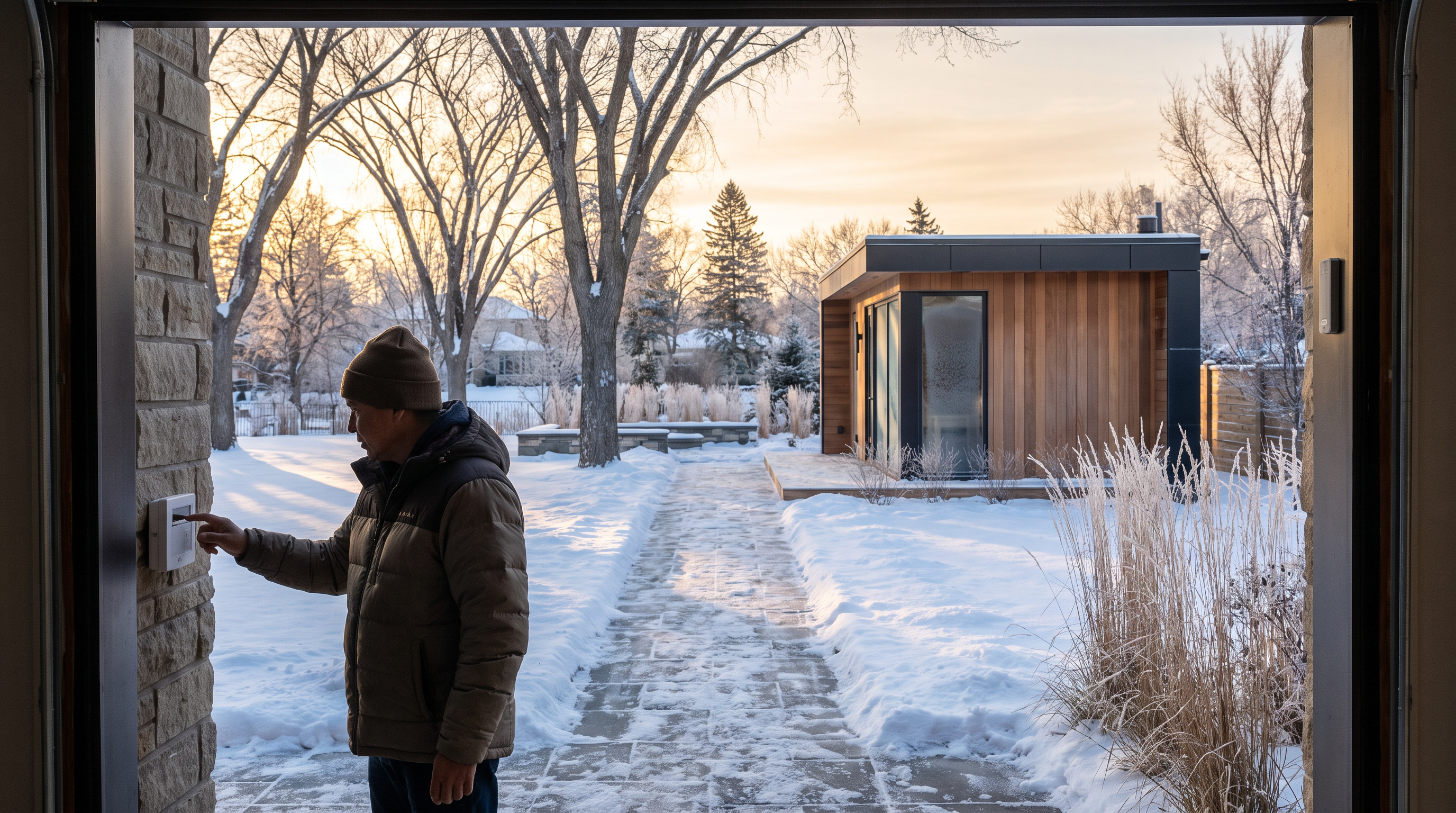
Why Manitoba winters add time
A winter sauna starts by heating a cold building, not just cold air. If the room begins at -25°C and the target is 80°C, the sauna is overcoming a 105°C temperature difference, and the heater has to warm the air, stones, benches, interior cladding, glass, door, floor, ceiling, and every other cold surface in the room.
Wind can increase heat loss through weak assemblies and air leakage. Opening the door during warm-up dumps part of the heated air. Large glass surfaces remain a significant heat-loss path. A sauna that reaches temperature quickly in September can take noticeably longer in January without anything being mechanically wrong. The real question is whether the winter increase is reasonable and predictable. A properly designed cold-climate sauna should still perform consistently, and if it heats well in summer but becomes almost unusable in winter, the heater, insulation, glass, air sealing, or sensor location deserves investigation.
Heater size changes everything
Heater sizing begins with the room's volume, but it can't end there. Harvia uses approximately 1 kW of heater output for each cubic metre of sauna volume as a broad starting point, and adds the equivalent of 1.2 cubic metres of calculated volume for every square metre of glass, stone, or similar uninsulated surface. That means a large glass wall can make a physically modest sauna behave like a much larger room from the heater's perspective.
An undersized heater can cause excessively long warm-up, near-continuous operation, weak winter recovery, higher stress on the heating elements, and disappointing stone temperature. But simply buying the largest heater available isn't the answer either. Harvia cautions that an oversized heater can warm the room air too quickly without giving the stones enough time to store heat properly, producing fast air temperature but weak steam performance. The heater should match the calculated room, not just the floor area.
A real Turon heater-sizing lesson
On one indoor sauna project reviewed by Turon, an existing 6 kW electric heater wasn't delivering the expected room performance. The planned correction was an upgrade to a 9 kW heater after considering the room and electrical requirements.
The lesson isn't that every sauna needs a bigger heater. It's that heater output has to reflect actual room volume, glass area, wall construction, desired performance, electrical capacity, and manufacturer requirements. A heater should be selected before the electrical system and finished room make a change difficult.
Insulation and air sealing affect warm-up differently
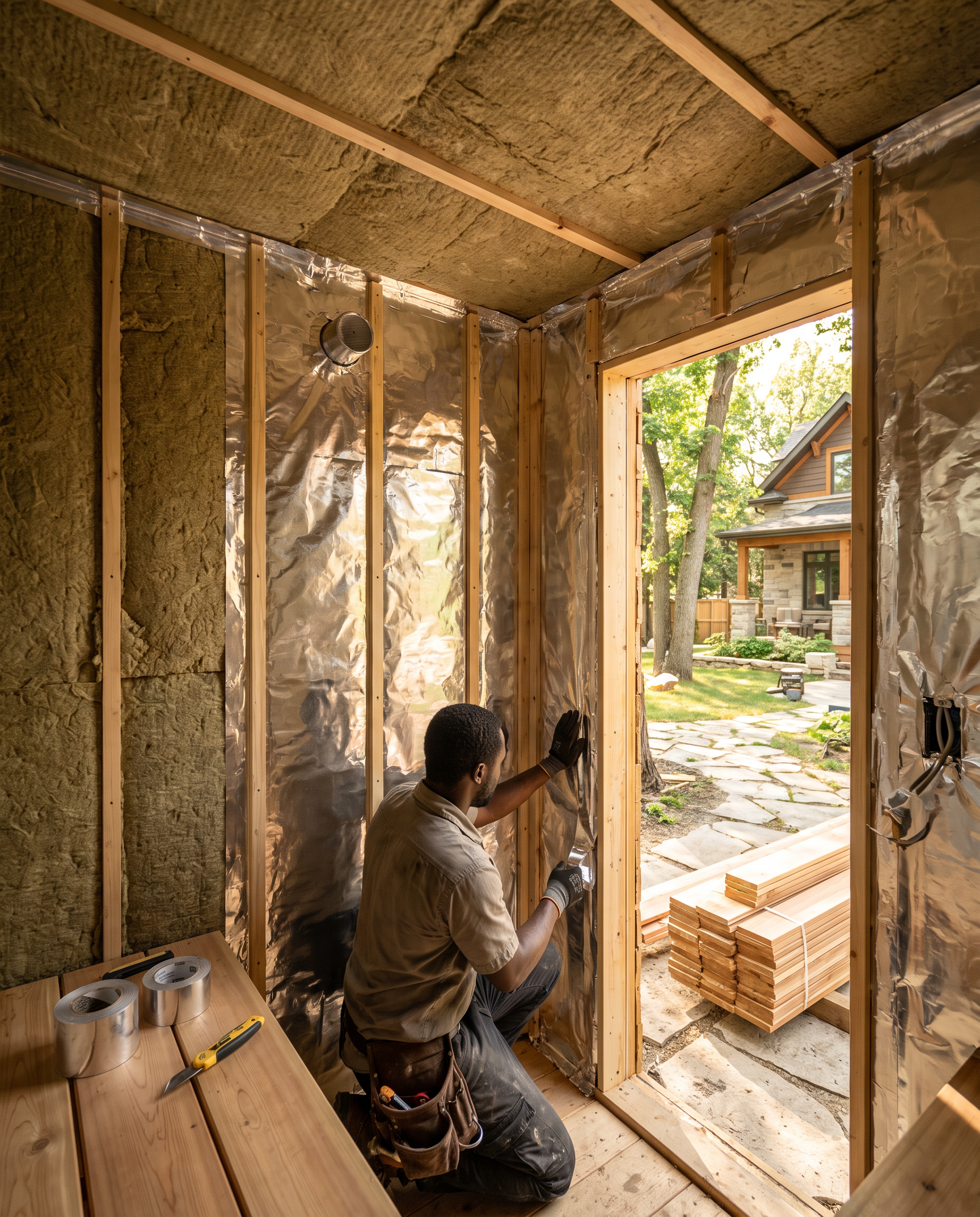
Insulation reduces conductive heat loss through the walls, ceiling and floor. Air sealing controls uncontrolled hot-air leakage. Both matter. A high nominal R-value doesn't guarantee fast warm-up if foil seams are open, the door leaks, or penetrations are poorly sealed. Likewise, a tightly sealed room can still lose substantial heat through an under-insulated ceiling or large glass package.
For a Manitoba outdoor sauna, prioritize ceiling insulation, continuous hot-side foil and air control, wall insulation, exposed-floor insulation, door sealing, controlled glass area, and reduced thermal bridging. The heater shouldn't be expected to compensate permanently for a weak enclosure.
Stone mass changes the character of the heater
Large-stone-mass heaters are popular because they can produce softer, more humid-feeling steam and retain heat longer. The trade-off is that more material has to be heated. Harvia explains that heaters with fewer stones tend to heat the sauna room faster and create a sharper heat, while larger-stone-mass heaters provide smoother steam and longer heat retention.
Neither is automatically better. A recovery-focused homeowner may value a large stone mass and accept a longer preheat. Someone prioritizing quick weeknight sessions may prefer a faster-heating wall heater or a more moderate stone capacity. This decision should be made intentionally, not discovered after installation.
Stone condition and stacking can slow the heater
Heater stones gradually crack and settle. Small broken pieces can restrict airflow through the heater, forcing the elements to work harder while transferring less heat into the room.
Harvia recommends rearranging the stones at least annually and replacing damaged stones. Its testing found that loose, correct stacking improves airflow and can help the sauna heat faster. Don't pack stones tightly around electric elements, and don't use random landscaping stones. Follow the specific heater manual for stone type, size, quantity, stacking method, and inspection frequency. A slow sauna may need maintenance rather than a new heater.
Ventilation can help or hurt performance
A sauna needs designed ventilation, and it needs the correct ventilation mode at the correct time. Too much open exhaust during warm-up can let heat leave faster than necessary. Too little ventilation during use can create stale air and poor drying.
Harvia notes that excessive ventilation can slow heating and that a drying vent may be kept closed during warm-up where the designed system and manufacturer instructions allow it. That advice shouldn't be applied blindly, though: a wood-burning stove still needs the combustion air and chimney draft specified by its manufacturer, and mechanical and gravity-ventilated electric saunas use different vent arrangements. The goal is controlled ventilation, not random leakage and not a sealed box with no fresh air.
Sensor placement can create false performance problems
The temperature sensor controls when an electric heater cycles. If it's too close to the heater, door, glass, or supply-air vent, it may read a temperature that doesn't represent the bathing zone, which can cause early cycling, unstable heat, or confusion between the controller reading and the actual bench temperature.
HUUM, for example, specifies sensor clearances from the heater, ceiling, windows, door and vents for its control systems. Always follow the selected heater and controller manual. Moving a sensor casually to make the displayed number look better is not a proper correction.
Safe ways to reduce waiting
The most effective changes happen in this order:
- Size the heater correctly. Calculate the real room volume and adjust for glass and uninsulated surfaces.
- Improve the enclosure. Insulation, foil continuity, ceiling details, floor exposure and door sealing all affect winter performance.
- Maintain the stones. Remove fragments and restore the correct airflow through the heater.
- Stop opening the door during warm-up. Every door opening releases heated air. Harvia recommends avoiding unnecessary door and window openings while the sauna is heating and operating.
- Use an appropriate target temperature. Heating to 75°C takes less time than heating to 95°C. A satisfying sauna depends on heat, stone temperature and löyly, not on chasing the largest number.
- Use scheduling or remote preheat. A compatible electric control can start the sauna before the planned session and notify the owner when it's ready.
- Choose stone mass around your priorities. Faster warm-up and maximum stone mass are competing goals.
- Keep the room appropriately sized. Unused ceiling height and unnecessary room volume still have to be heated.
Remote preheating must be safe
Remote start is convenient, but it must never bypass safety. Compatible systems use door sensors or another approved safety function to confirm the room is clear and the door is closed. Harvia's door-switch system cancels remote activation when the door is opened. HUUM's remote-start safety requires the user to confirm the sauna is empty and safe before app-based heating.
Before enabling remote heat: confirm the heater and controller support it, install the required safety device, keep towels and objects away from the heater, confirm the sauna is empty, confirm the door is closed, follow the manufacturer's exact setup procedure, and have the electrical work coordinated properly. A smart control does not make an unsafe installation safe.
Signs the sauna is taking too long
Investigate the system when a correctly sized electric sauna regularly takes far beyond 60 minutes in mild weather, winter heat-up becomes several times longer than summer heat-up, the heater runs continuously but the room stalls below target temperature, the controller displays a high temperature while the upper bench feels much cooler, the stones no longer evaporate water effectively, the door or glass perimeter has obvious leakage, warm air is escaping through an open drying vent, one or more electric elements aren't heating, the sensor sits close to a vent, door, or heater, or the sauna improved dramatically after the stones were restacked.
Harvia lists heater capacity, sensor placement, and equipment condition among the issues to check when a sauna doesn't reach the expected temperature in approximately 35 to 45 minutes. Don't diagnose the problem from the thermometer alone.
The Turon view
Heat-up time should be treated as a design outcome, created by the interaction between room volume, insulation, air sealing, ceiling height, glass, heater output, stone mass, ventilation, sensor placement, and winter exposure.
A premium sauna shouldn't require the homeowner to accept random performance. The realistic target may be 40 minutes, 60 minutes, or longer depending on the chosen experience. What matters is that the number is understood, the trade-offs are intentional, and the sauna performs predictably in the season when it'll actually be used.
A fast sauna isn't automatically a good sauna. A good sauna becomes ready when expected, provides proper stone heat, and stays comfortable through the session. That's the standard worth designing for.
Frequently Asked Questions
Is 45 minutes a normal sauna heat-up time?
Yes. For a properly sized electric heater in a well-insulated room, approximately 35 to 60 minutes is a normal range. Outdoor temperature, glass, stone mass and desired temperature can increase it.
Why does my outdoor sauna take 90 minutes in winter?
A very cold room must heat its air, stones, benches, cladding, floor, glass and ceiling from a much lower starting temperature. Ninety minutes may be reasonable for some cold-weather designs, but recurring extreme delays can indicate an undersized heater, air leakage, excess glass, poor insulation or blocked stone airflow.
Will a larger heater always reduce the heat-up time?
Not necessarily. A slightly larger correctly matched heater may help, but an oversized heater can warm the air before the stones store enough energy for good steam. Use the manufacturer's calculated room-volume range rather than selecting by maximum power alone.
Should I close the sauna vents while it heats?
Only where the ventilation design and heater manufacturer allow it. A separate drying vent may sometimes remain closed during electric warm-up, but required supply air, combustion air and wood-stove draft must never be blocked.
Can I remotely start an electric sauna?
Yes, when the heater, control system and required safety devices are approved for remote use. Door sensing or another approved safety function should prevent the heater from starting when the sauna is not confirmed safe.
Can I remotely start a wood-burning sauna?
No. A wood fire must be lit, monitored and operated according to the stove manual. It should not be left unattended during burning.
Planning an outdoor sauna in Winnipeg or Manitoba? Book a consultation with Turon Saunas to review the room volume, glass package, insulation, heater output, stone mass, electrical requirements and expected winter warm-up time before the design is finalized.
The goal isn't just to install a heater. It's to build a sauna that becomes ready when expected and performs properly once you step inside.
