
Neither heater is better. They create different experiences, need different planning, and suit different properties. The right pick depends on how you'll use the sauna, where it's going, what your property can support, and how much maintenance you're willing to take on.
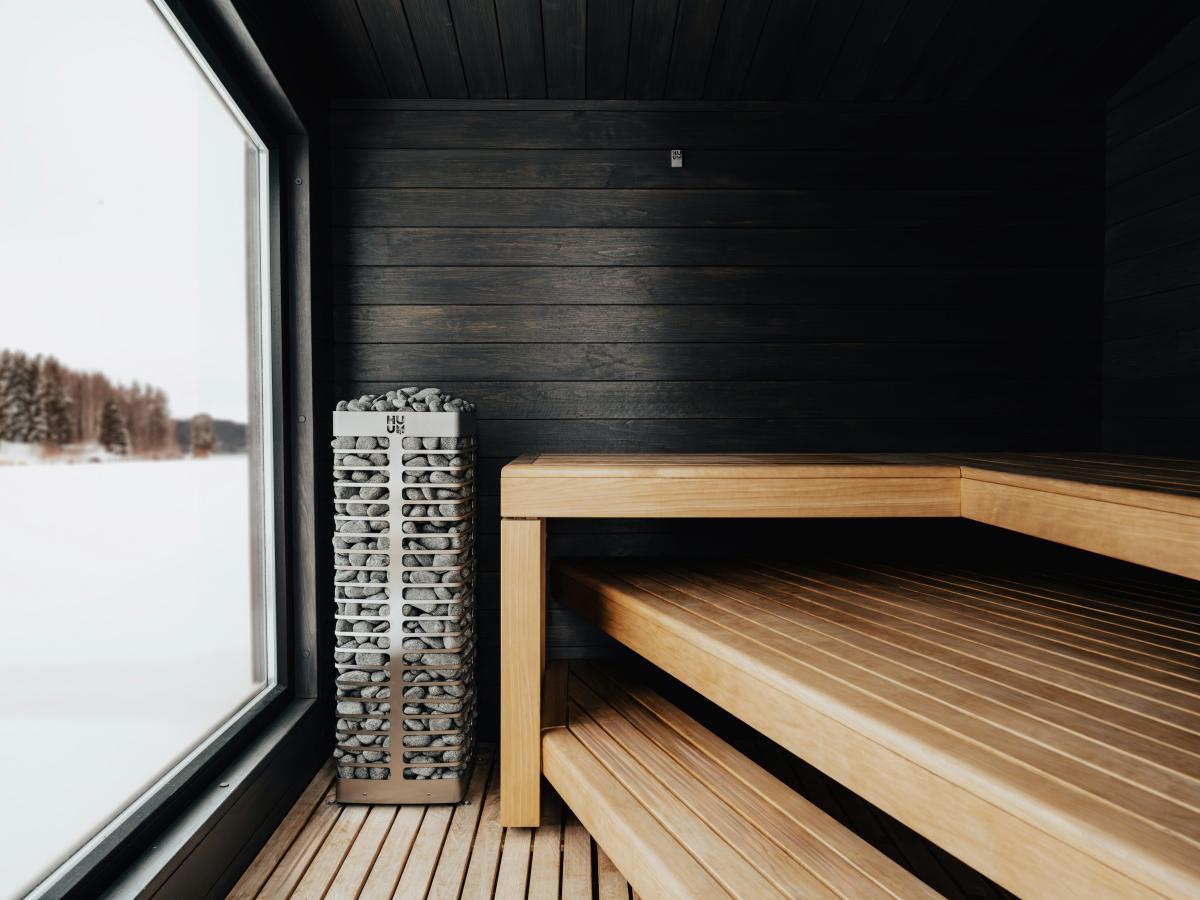
Electric: convenient, clean, predictable
Electric heaters are the practical choice for most residential builds, especially on city lots and suburban backyards. Turn it on, let it preheat, walk in — no firewood, no ash, no tending a fire. Many modern units pair with digital or Wi-Fi controls, which makes daily use easier if the sauna is part of a weekly routine.
The heat itself is steady and predictable. You're not building a fire — you're stepping into a room that's already been brought up to temperature for you.
The tradeoff shows up in installation planning, not daily use. An electric heater needs correct sizing: voltage, circuit requirements, breaker size, wire run, panel capacity, control and sensor placement, and — for an outdoor build — whether trenching is needed to get power out there. In Winnipeg, detached accessory structures with electrical service may need trade permits, so this has to be part of the plan from day one, not something sorted out once the walls are up.
Operating cost is lower than most people assume. An 8 kW heater running for two hours uses roughly 16 kWh. At Manitoba Hydro's residential rate of 8.196 cents per kWh, that's about $1.31 in electricity before taxes. Actual cost varies with warm-up time, outdoor temperature, insulation, and glass — but it shows why heater sizing and insulation quality belong in the same conversation as cost.
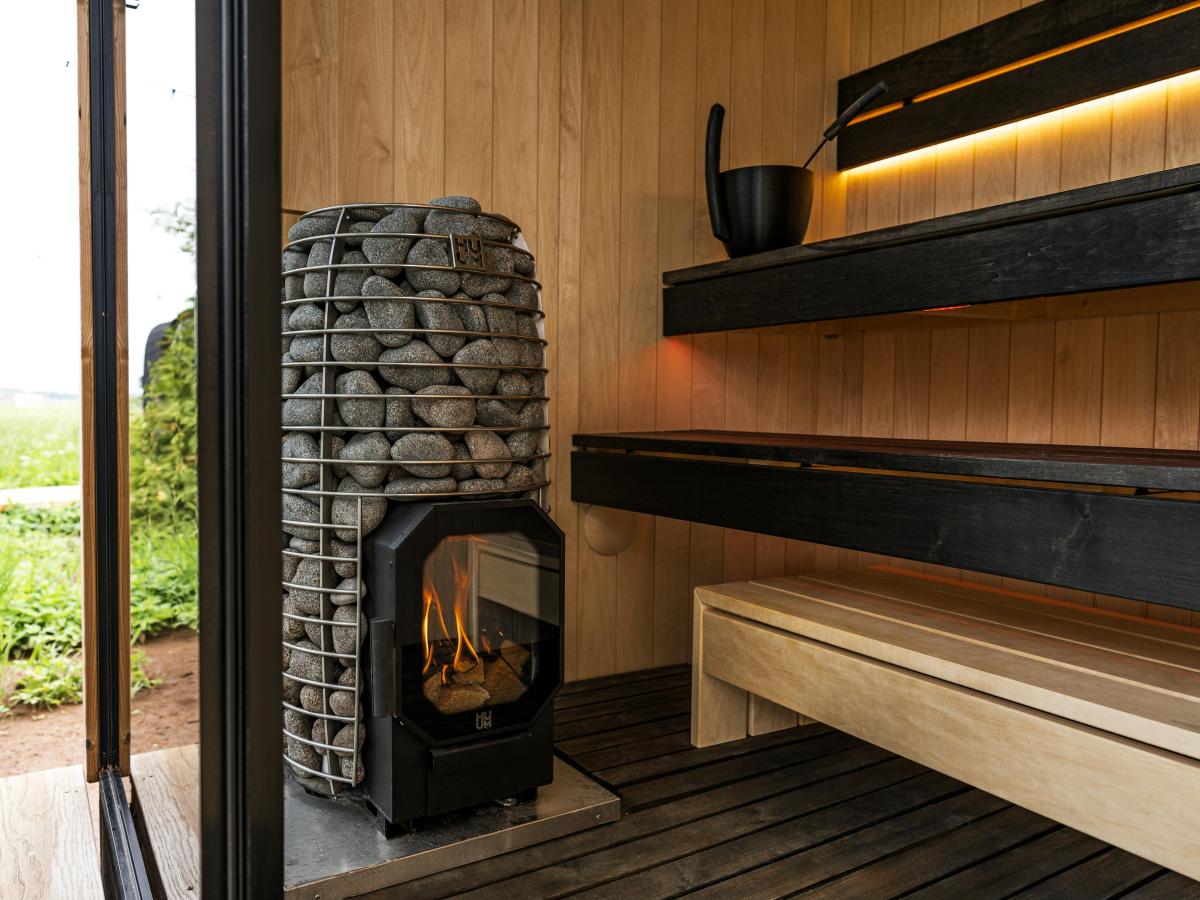
Wood-burning: ritual, atmosphere, more hands-on
A wood-burning heater is a different kind of sauna entirely. Fire, smell, sound, the slower rhythm of building heat instead of flipping a switch — for a lot of people, that's the whole point.
It fits rural properties, lake lots, and cabins especially well, and it makes sense anywhere electrical service is limited or expensive to bring in. But it asks more of you. Dry firewood needs somewhere to live. Ash needs cleaning out. You're managing wind direction, chimney height, roof penetration, flashing, and clearances from anything combustible — and none of that is optional once there's an open flame involved.
The install isn't a stove dropped in a corner. The wall behind it, the ceiling above it, the stovepipe, the chimney transition, and the roof exit all have to be built to handle real heat, not just look like they can. Cut corners here and the risk isn't cosmetic. It's structural, and it's safety.
Permitting looks different for each
Electric installs live and die on electrical work: heater sizing, dedicated circuits, sensor placement, clearances from benches, and compliance with CSA standards for electric sauna heating equipment. Wood-burning installs live and die on combustion safety: chimney systems, heat shielding, roof penetrations, and whatever your local inspector and insurer expect to see. Confirm both before you build, not after.
Winter changes the math, but the room matters more than the heater
In a Manitoba winter, a poorly insulated sauna with too much glass and weak air sealing will underperform no matter which heater sits inside it. Electric stays consistent through the cold, but only if it's sized correctly for a well-built envelope. Wood-burning can throw serious heat in deep cold, but you're starting the fire and managing the burn yourself every time — the session starts before you walk in.
City lot or acreage
Electric wins on most city lots: less smoke, no wood storage, easier on neighbors, easier for using it three times a week without thinking about it. Wood wins where there's room for the ritual and the storage that comes with it. Plenty of people go the other direction too — city owners who want the fire and plan for it properly, rural owners who'd rather flip a switch.
At Turon Saunas, we build and spec both. The heater isn't chosen off a spec sheet. It gets sized against room dimensions, insulation, ventilation, bench layout, clearances, and, for wood, chimney detailing. That's the part that actually determines whether the heater performs the way you expected once winter shows up.
