
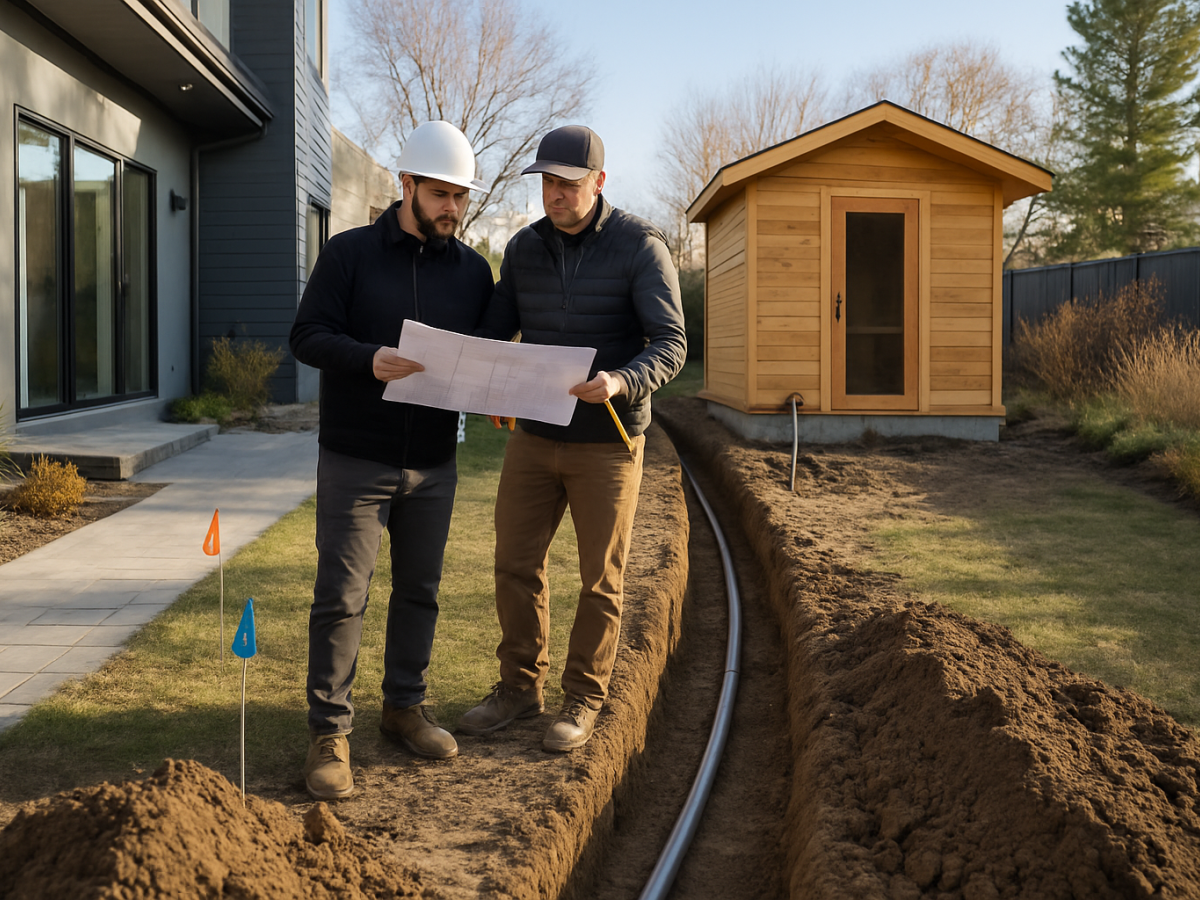
For most homeowners installing an electric sauna, yes. Plan on a licensed electrician.
An electric sauna heater is a substantial, permanently connected electrical load, and the project usually adds lighting, ventilation, digital controls, temperature sensors, a door sensor, and Wi-Fi connectivity, plus a service run from the house out to a detached backyard structure. All of that has to work together safely.
There's a limited homeowner self-wiring option in Winnipeg and in areas Manitoba Hydro inspects: a qualifying homeowner can sometimes get a permit and do certain electrical work themselves on an owner-occupied, single-detached home. The exceptions are narrow, though, electrical service work is excluded, and manufacturers often require licensed installation outright. HUUM's current North American UKU installation manual, for example, states that the electrical work it describes may only be completed by a licensed electrician. For a premium custom sauna, this isn't the place to experiment.
Load planning comes first
A heater gets selected based on room volume, glass area, construction, and the performance you want. Once it's chosen, the electrical requirements follow directly from the manufacturer: voltage, conductor size, control arrangement, circuit protection, and connection method. Most premium residential heaters are hardwired, high-load appliances, not something you plug into an existing receptacle. HUUM's UKU manual specifically instructs installers to size supply conductors to the heater manual and recommends new wiring on a dedicated circuit.
An electrician also has to evaluate the home's existing system: whether the main panel has physical breaker space and available capacity, whether a subpanel is needed, how far the sauna sits from the house, whether the run goes underground or overhead, whether separate circuits are needed for the heater, lighting, controls, or ventilation, and whether the heater could trigger a panel or service upgrade. Manitoba Hydro requires total added load and estimated demand information when reviewing new service connections or changes to existing service, which is exactly why this planning needs to happen before the sauna is framed, not after.
Permits
In Winnipeg, constructing, altering, repairing, or extending an electrical installation requires an electrical permit, and a detached accessory structure with electrical service needs its own trade permit on top of any building or development approvals for the structure itself. Outside Winnipeg, Manitoba Hydro generally administers electrical permits and inspections, and it requires a permit for all electrical work, including work done under an approved homeowner self-wire permit.
The permit isn't paperwork for its own sake. It's what creates the inspection pathway. Depending on the project, that can mean inspecting the underground trench, the rough wiring before it's concealed, and the completed installation. Manitoba Hydro requires wiring to stay visible for inspection, and Winnipeg requires mandatory inspections at applicable stages of permitted work. Closing the walls or filling the trench before the required inspection turns into delays and extra cost fast.
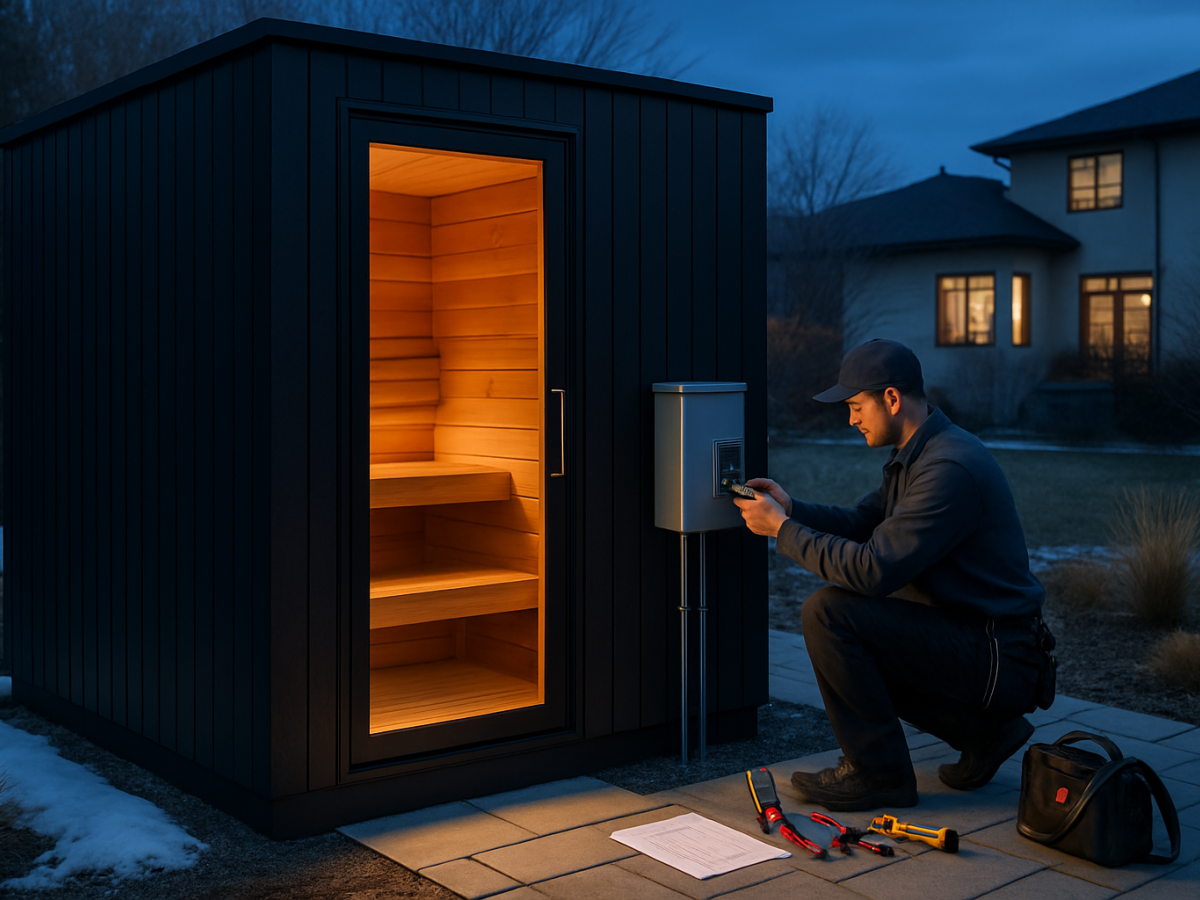
Outdoor wiring isn't an extension cord
A detached sauna's electrical route may have to cross landscaping, patios, walkways, or driveways, and burial depth and wiring method depend on the conductor or raceway type, whether mechanical protection is provided, and whether the route crosses a vehicular area. Winnipeg's electrical installation guide sets different minimum burial depths for direct-buried cable, armoured cable, and conduit, and requires underground conductors in conduit to be approved for wet locations.
Equipment exposed to Manitoba weather needs to be rated for it specifically. Manitoba Hydro's current technical interpretation states outdoor electrical equipment must be rated for outdoor use, and putting indoor-rated equipment inside a weatherproof box doesn't fix that on its own. An electrician working on an outdoor sauna also has to coordinate outdoor-rated disconnects and enclosures, conduit transitions into the sauna, protection against physical damage, condensation and water entry, heater and control-module placement, sensor wiring, lighting and ventilation controls, and required clearances around the equipment. All of it is far easier to sort out before the interior foil, strapping, and cladding go up.
Wood-burning saunas aren't exempt
A wood-burning heater itself doesn't need an electrical connection, but most wood-fired saunas still run lighting, pathway lights, ventilation fans, receptacles, or controls, and those still need to be permitted and installed correctly. Going wood instead of electric doesn't remove the need for professional planning. It just shifts it toward the stove, chimney, heat shielding, clearances, roof penetration, and solid-fuel permitting instead.
How we handle it
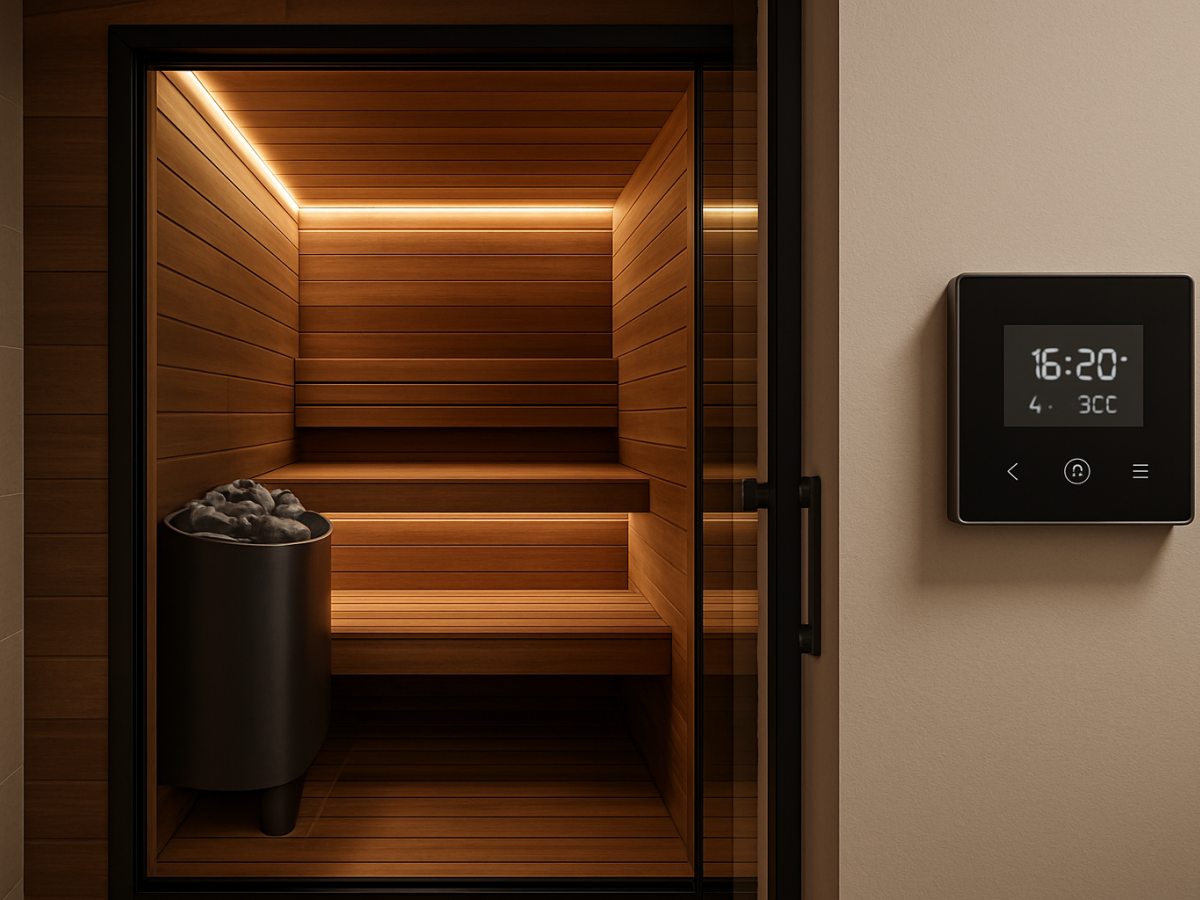
At Turon Saunas, the electrical scope gets coordinated as part of the full build: the heater and control system get chosen early, the electrician gets the real specifications, and the power route and rough-in timing get planned together, with inspection access protected the whole way through. The electrician stays responsible for the permitted electrical work. We stay responsible for making sure that work fits where the heater actually belongs, where the control module can be mounted safely, where sensors need to sit, how the benches affect clearances, and when wiring has to be finished before the interior gets closed up.
The bottom line
For most electric sauna installations in Winnipeg and Manitoba, hiring a licensed electrician is the right call. A qualifying homeowner may have a narrow legal path to do some of the wiring themselves, but that doesn't override manufacturer requirements, skip inspections, or turn a high-load sauna system into a sensible DIY project. At Turon Saunas, licensed electrical coordination is built into the project from the start, not something left for the client to sort out once construction is already underway.
Electrical and permit requirements depend on the equipment selected, project scope, and local authority. Confirm requirements with the City of Winnipeg, Manitoba Hydro, your electrical contractor, and the heater manufacturer before work begins.
