
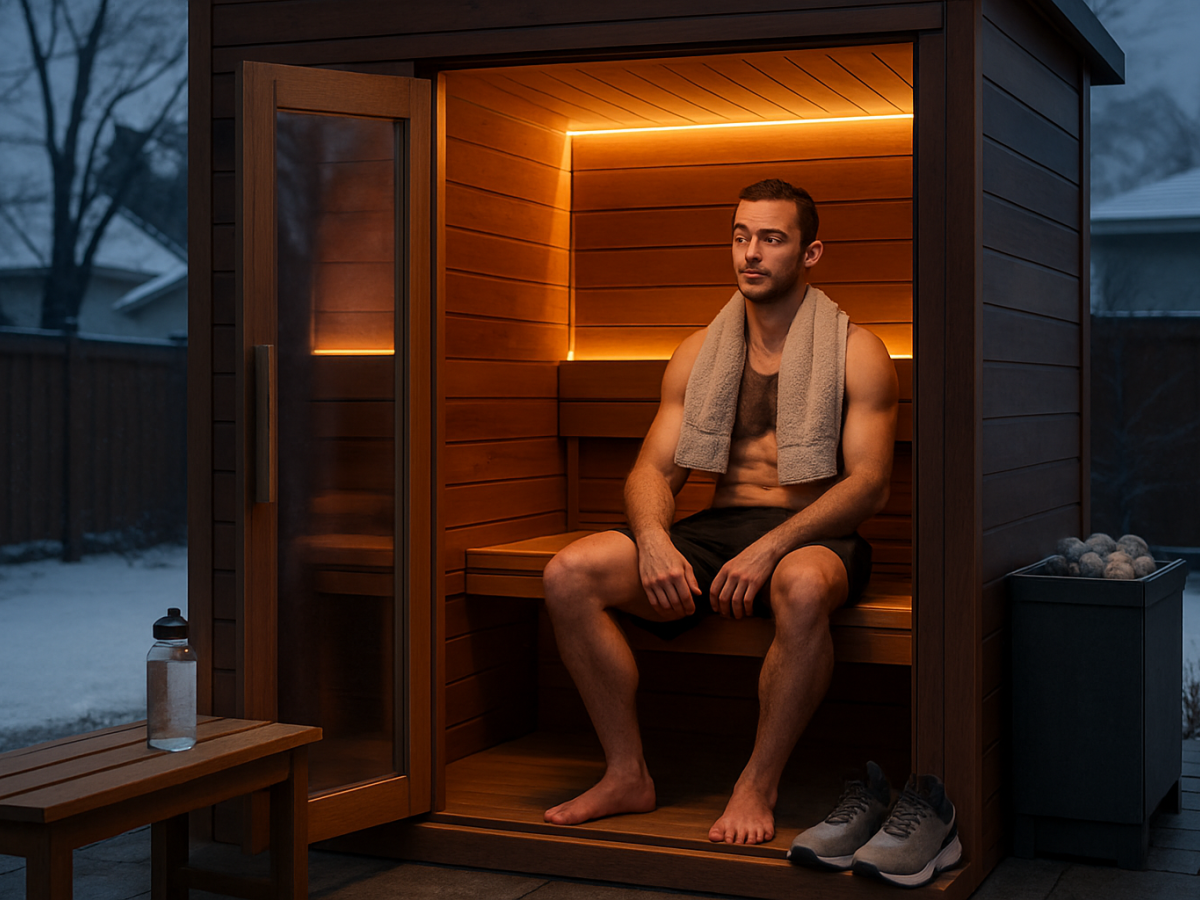
Sauna gets associated with relaxation, but for a lot of active people, it's part of the recovery routine. Athletes, runners, lifters, and generally active homeowners use it after training because it feels good, helps them unwind, and seems to support recovery. That instinct isn't unreasonable. Heat affects circulation, how sore you feel, and the body's overall recovery environment.
Sauna isn't magic, though. It doesn't replace sleep, nutrition, hydration, good training programming, or time. The real question isn't whether sauna is a miracle recovery tool. It's whether it can be a genuinely useful part of a broader recovery routine, and the evidence suggests it can.
How heat may help recovery
A few things are going on. Heat exposure increases blood flow to the skin and shifts the body into a different physiological state after training. That doesn't mean it "flushes toxins" or instantly repairs muscle tissue, but it may support relaxation and circulation. Recovery isn't only mechanical, it's also perceptual: if someone feels less stiff, more relaxed, and more ready to train again, that matters on its own. A reliable post-workout ritual tends to support recovery more broadly too, since it reinforces hydration, calm, and rest as a habit rather than an afterthought. None of these mechanisms are especially easy to measure, but together they explain why sauna has stuck around with physically active people.
What the research actually says
The recovery evidence is promising but still limited. A randomized crossover study of male basketball players found that a 20-minute infrared sauna session after resistance exercise improved perceived recovery, reduced subjective muscle soreness, and helped preserve one measure of explosive performance compared with passive recovery. That's useful, not the final word: the study was small, used infrared heat specifically, and focused on a narrow group of trained athletes.
There's broader interest too. A review of post-exercise heat exposure found sauna bathing after exercise has been studied for possible benefits to endurance adaptation, plasma volume expansion, and cardiovascular response, especially in endurance athletes. That doesn't mean everyone needs sauna after every workout, but it does suggest sauna can be more than a comfort habit. The safest read: sauna may support recovery, mostly by improving how someone feels after training and by fitting into a broader recovery strategy.
Timing around workouts
For most people, after training makes more sense than before. Pre-workout sauna can feel relaxing, but depending on the person and the session, it can also cause fatigue, fluid loss, or a weaker workout. Post-workout, the session is already done and the body is already warm, so the sauna slots naturally into the wind-down.
The workout type still matters. After a heavy lift, hard run, team sport, or conditioning session, the goal isn't to camp out in the sauna. Use it as a short recovery tool, then rehydrate and cool down properly. More isn't always better here either.
What about contrast therapy?
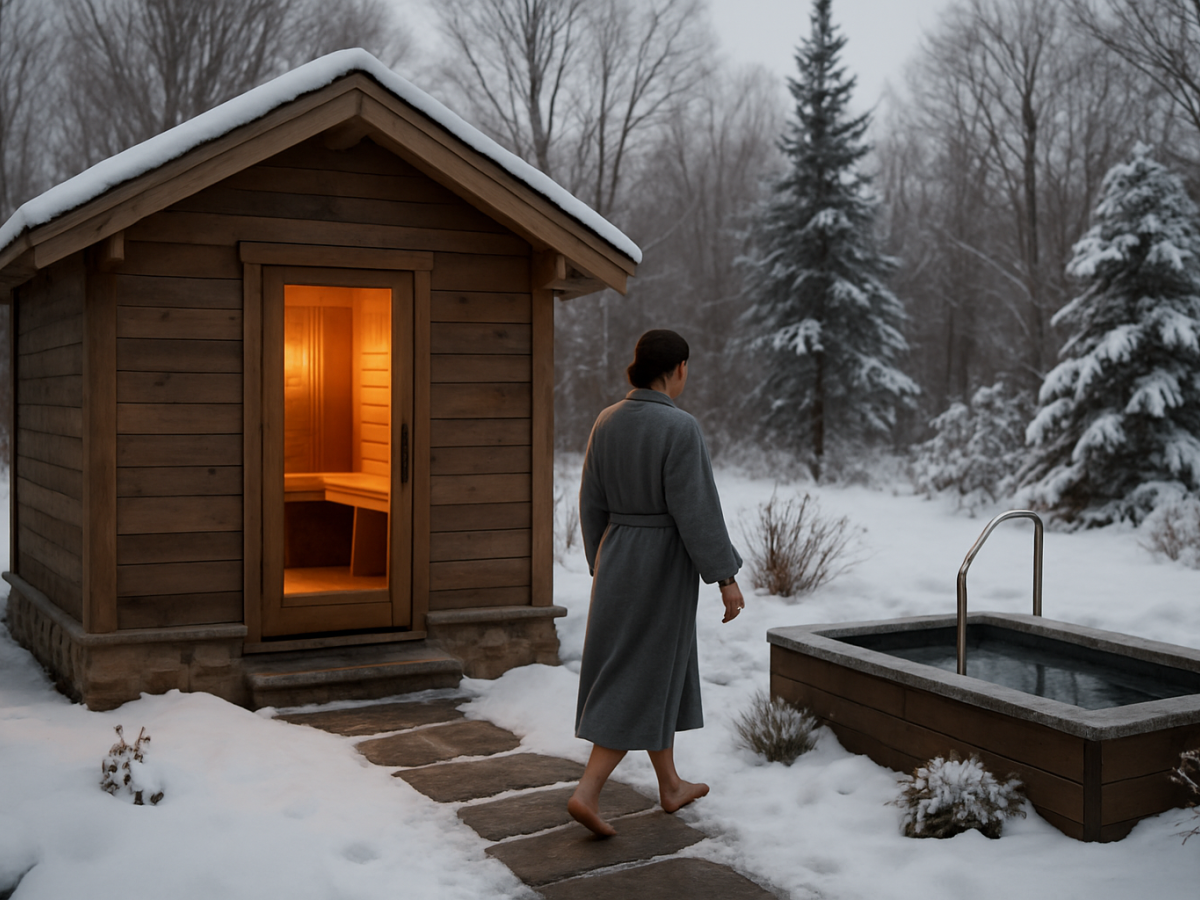
Contrast therapy is a big reason sauna appeals to athletes and active clients, especially somewhere cold like Manitoba, where recovery isn't only about heat, it's about the rhythm of heat and cold: sauna, cool air, cold shower or plunge, then rest. That ritual feels powerful and mentally resetting for a lot of people.
The science on contrast therapy is still developing, and not every dramatic claim about it is proven, but there's legitimate research interest in how alternating heat and cold affects circulation, perceived recovery, and the body's response to thermal stress. In practical terms, it helps active people feel restored after training, and it's a big part of why traditional sauna fits so naturally into a cold-weather recovery routine on the prairies.
Realistic expectations
Sauna is a helpful tool, not a cure-all. It may help you feel less sore, help you relax, support circulation and your general sense of recovery, and make you more likely to stick with a consistent recovery habit. It doesn't replace the fundamentals, though. If sleep is poor, nutrition is off, hydration is low, or training is poorly managed, sauna won't fix any of that. And it isn't a treatment for injury. A significant strain, tear, swelling issue, or other medical concern is a different conversation entirely.
Sauna can improve the recovery environment. It doesn't guarantee recovery by itself, and that's still a real thing to have.
How often
There's no single perfect prescription. Some people use it after hard sessions a few times a week, others use it more often because they enjoy it and recover well with it. A practical approach is to start with moderate sessions, pay attention to how your body responds, rehydrate afterward, and avoid turning recovery into another stress event. Short, consistent sessions tend to beat chasing extremes.
Why this matters for home ownership
Most active people aren't just asking whether sauna helps recovery. They're asking whether it's worth owning one. A home sauna changes that math because it makes recovery easy to repeat: no booking time elsewhere, no drive across the city, no relying on a public facility. It just becomes part of the week's rhythm, which is a real advantage for anyone training seriously.
At Turon Saunas, we see recovery as one of the most natural reasons people invest in a proper outdoor sauna. A well-built traditional sauna gives you a private space for heat, quiet, contrast therapy, and recovery you can actually repeat, week after week, which tends to matter more over time than any single wellness experience.
The bottom line
Yes, saunas can genuinely help muscle recovery, especially as part of a broader post-workout routine. The evidence points to real benefits for perceived soreness, relaxation, and recovery readiness, and it may support a consistent recovery ritual, which matters more than most people give it credit for. But it's not a shortcut. It works best supporting the bigger picture: good training, good sleep, hydration, nutrition, and smart recovery habits. For anyone who wants recovery built into daily life, a home sauna can become one of the most useful pieces of that routine.
