
Are Barrel Saunas a Good Investment? Pros, Cons, and When a Cabin Is the Better Buy
Barrel saunas are compact, recognizable, and usually cheaper than a fully custom insulated cabin, which makes them a sensible entry point for a lot of homeowners. But a good investment gets judged by more than the price tag: will it actually get used regularly, will it perform through a Manitoba winter, how much upkeep does it need, and will it still suit the property years down the road?
A barrel sauna can be a genuinely good investment for the right buyer. For homeowners who want dependable winter performance, better bench design, real architectural integration, and local support, an insulated custom cabin is usually the stronger long-term purchase.
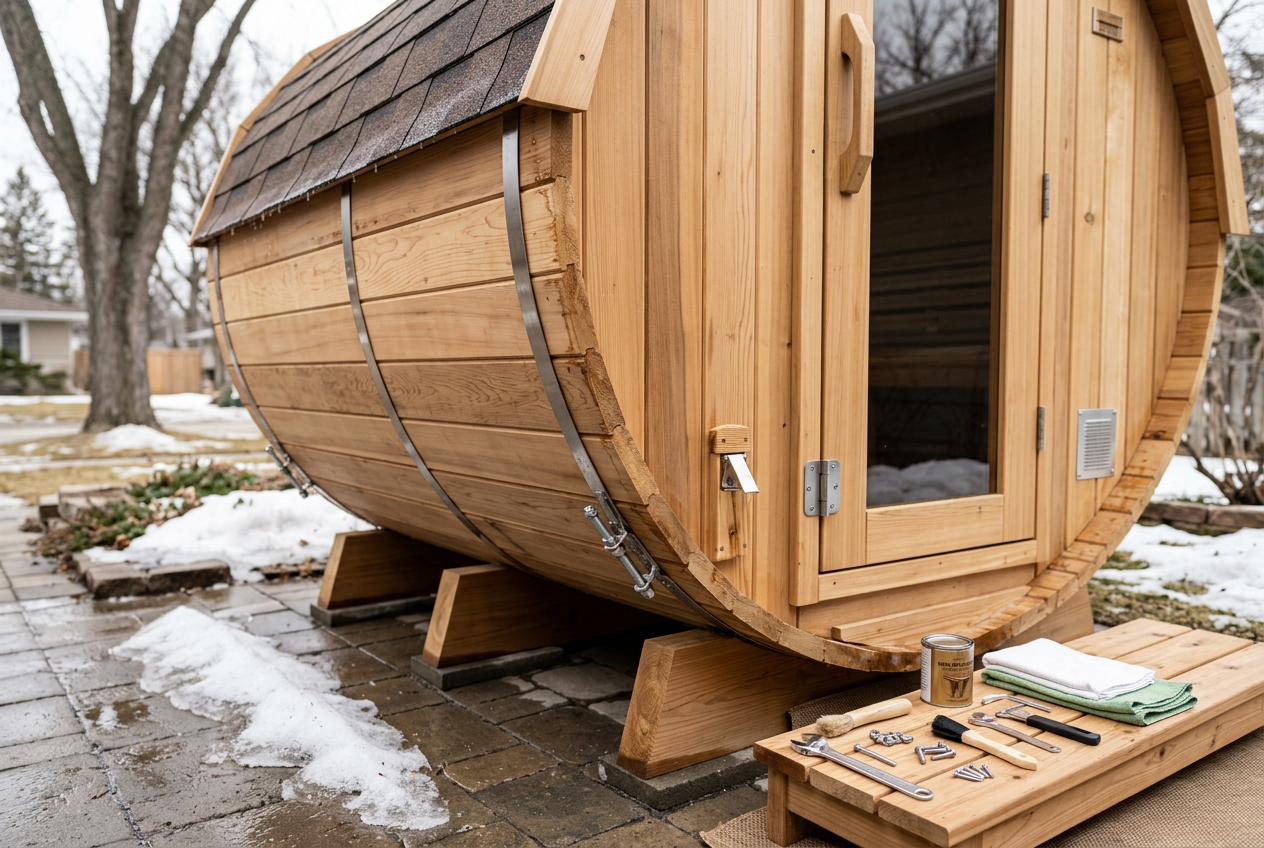
Why barrel saunas are popular
Cost comes first. A barrel kit uses a standardized design and relatively simple construction, which lowers the price and shortens the path to ownership for anyone who doesn't need a fully customized building. The curved shape also keeps the heated room compact: one major barrel manufacturer says its products commonly reach typical sauna temperatures in roughly 30 to 60 minutes, though colder northern conditions can stretch that out. Real-world performance still depends on the model, heater, outdoor temperature, glass area, and how tightly the door and wood shell fit together.
The look matters too. A well-maintained cedar barrel suits a cottage, an acreage, or a rustic backyard, and plenty of homeowners simply prefer the shape on its own terms.
Quick heat isn't the same as good comfort
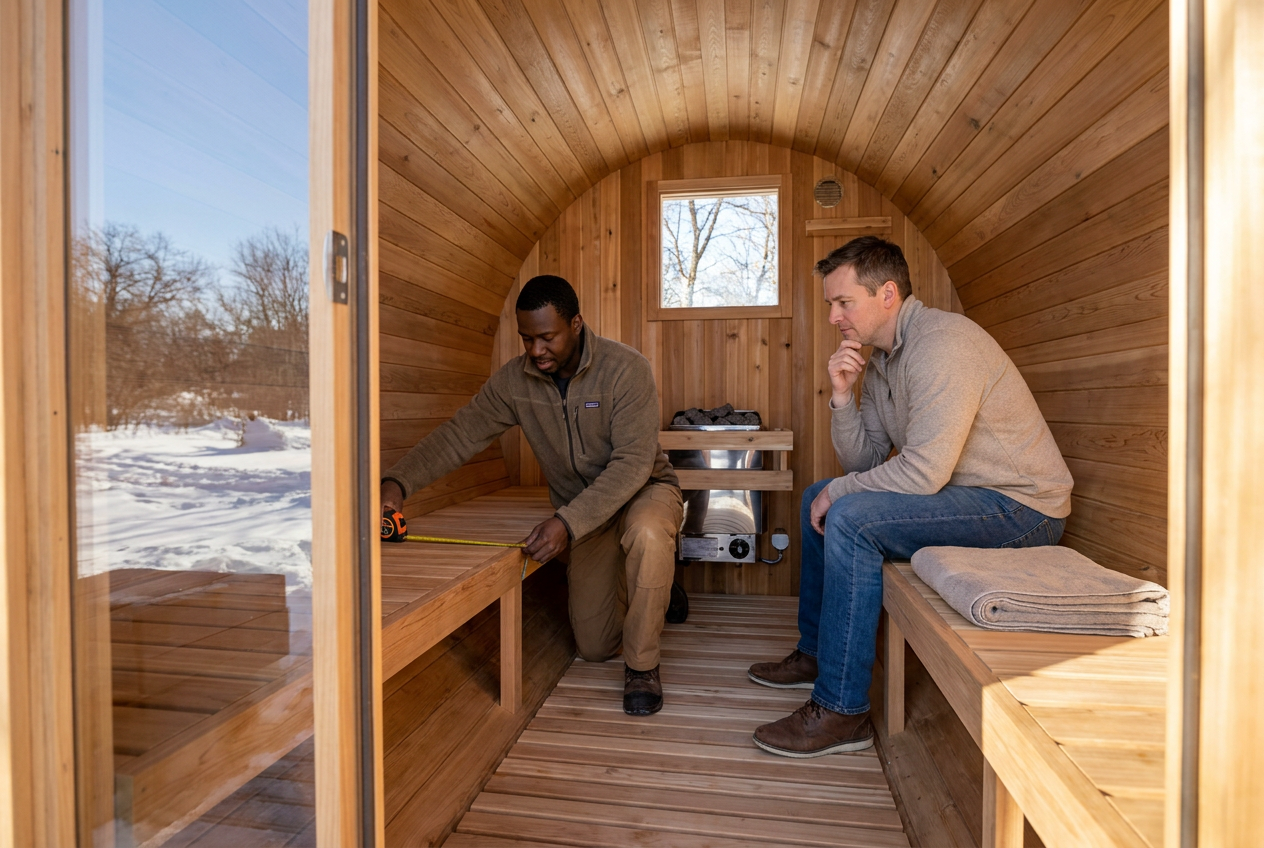
Heat rises, so bathers need to sit high enough to stay in the warmer part of the room. The North American Sauna Society recommends running the main upper bench along the longest wall, and recommends roughly six feet of room width when lying down matters. A barrel's curved walls work against that geometry: many models use two opposing benches at one relatively low level, which can technically seat several people while limiting shoulder room, bench depth, foot height, and the ability to actually lie down.
That trade-off may be fine for shorter, occasional sessions. It gets more noticeable when the sauna sees several uses a week, gets shared across a family, or has to function as a real recovery space. A custom cabin lets the ceiling height, upper and lower benches, access steps, heater, door, and ventilation get designed together, and for anyone planning regular use, that comfort can matter more than the upfront savings.
How barrel saunas hold up through Manitoba winters
A quality barrel sauna can genuinely get hot here. The better questions are how long that takes in deep cold, how fast it recovers once the door opens, and how the structure handles years of snow, rain, wind, and freeze-thaw. Most barrel designs use solid-wood staves as both the interior finish and the exterior shell, which keeps things simple but gives you less control than a layered, insulated wall and roof system. A properly built cabin can include dedicated wall and ceiling insulation, controlled air sealing, foil, an interior air space, exterior weather protection, and separate roof and cladding systems, and current Harvia cabin products use insulated assemblies specifically to improve heat retention and heating efficiency.
None of that means every cabin beats every barrel automatically. A poorly built cabin can still disappoint. What an insulated cabin buys you is more control, over cold-weather performance, moisture management, ventilation, glass, and heater sizing, and in a prairie climate that control adds up fast.
Durability and maintenance
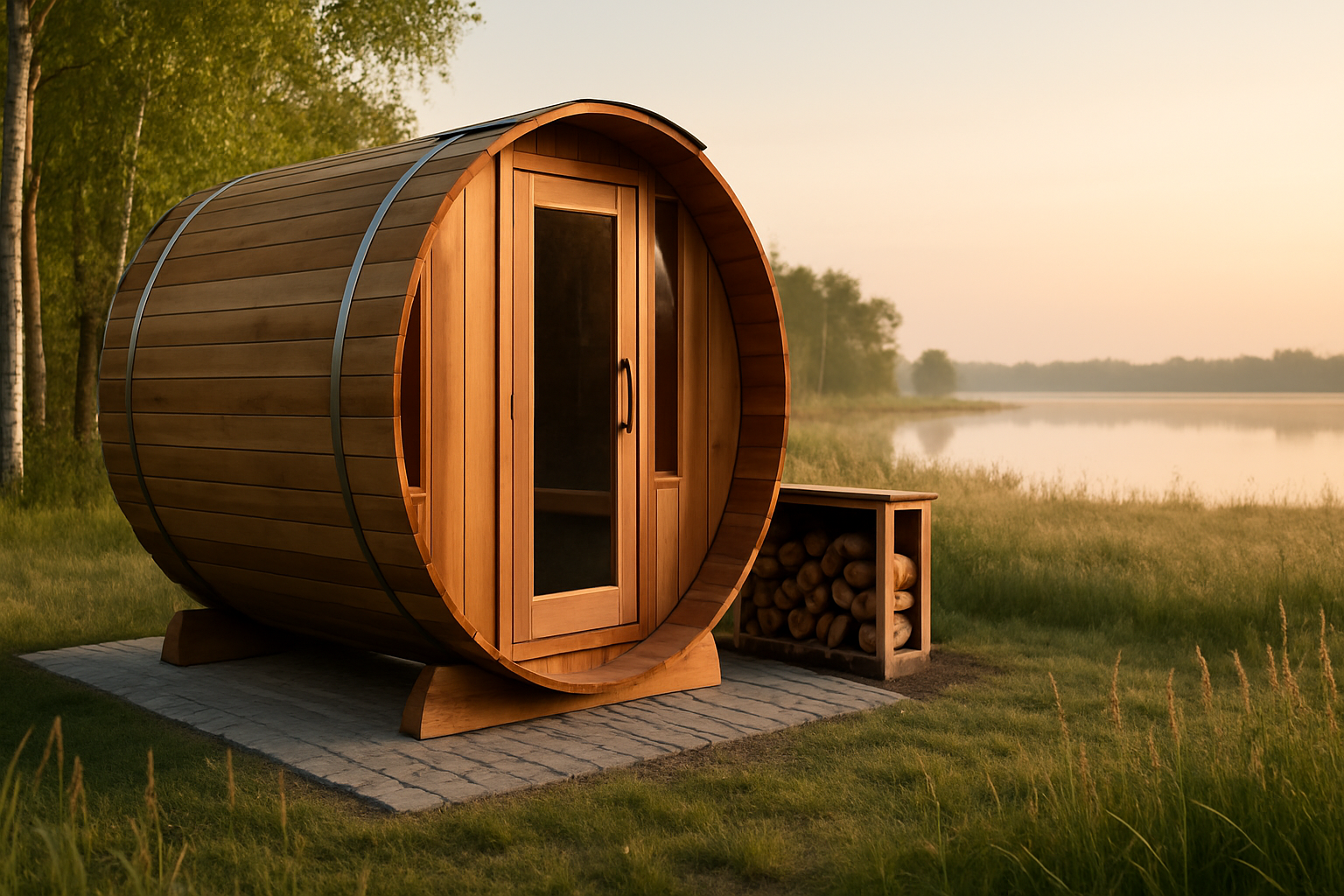
Barrel saunas aren't maintenance-free. The wood staves expand and shrink as moisture conditions shift, and one major manufacturer advises owners they may need to tighten the metal bands or add filler staves as the wood adjusts, along with protecting the exterior from weather. The same manufacturer notes some water seepage after rainfall can happen in a barrel sauna and recommends letting the sauna dry out, including through regular heating and use. None of that makes the sauna defective, it's just what comes with a solid-wood curved structure exposed to the weather: keeping up the exterior finish, checking the roof covering, adjusting the door, watching for gaps between staves, keeping vents clear, replacing worn heater stones, and catching water entry early.
A custom cabin still needs its own maintenance, but the components split by function: the roof manages precipitation, the exterior cladding protects the wall, the insulated structure controls heat, the interior cladding creates the room itself. Splitting those roles apart tends to make each one easier to check and fix on its own instead of treating the whole structure as one piece.
Sticker price vs. completed cost
A barrel kit almost always wins on the initial number, but that online price usually leaves out freight and unloading, backyard access, foundation or base prep, assembly labour, electrical work, permits and inspections, added roofing or weather protection, landscaping restoration, and future warranty labour or shipped replacement parts. Even once all of that gets added in, a barrel can still land meaningfully cheaper than a premium custom cabin. What actually matters is comparing two completed projects against each other, not an online kit price against a full custom quote. Lifetime value goes beyond the build cost too: how often the sauna gets used, whether people can sit or lie down comfortably, how it performs in winter, what upkeep it needs, and whether local repair and warranty support exist at all. A cheap sauna that ends up cramped or hard to maintain can turn into poor value fast, while a pricier one that gets used consistently for years can end up the better buy.
What about resale value?
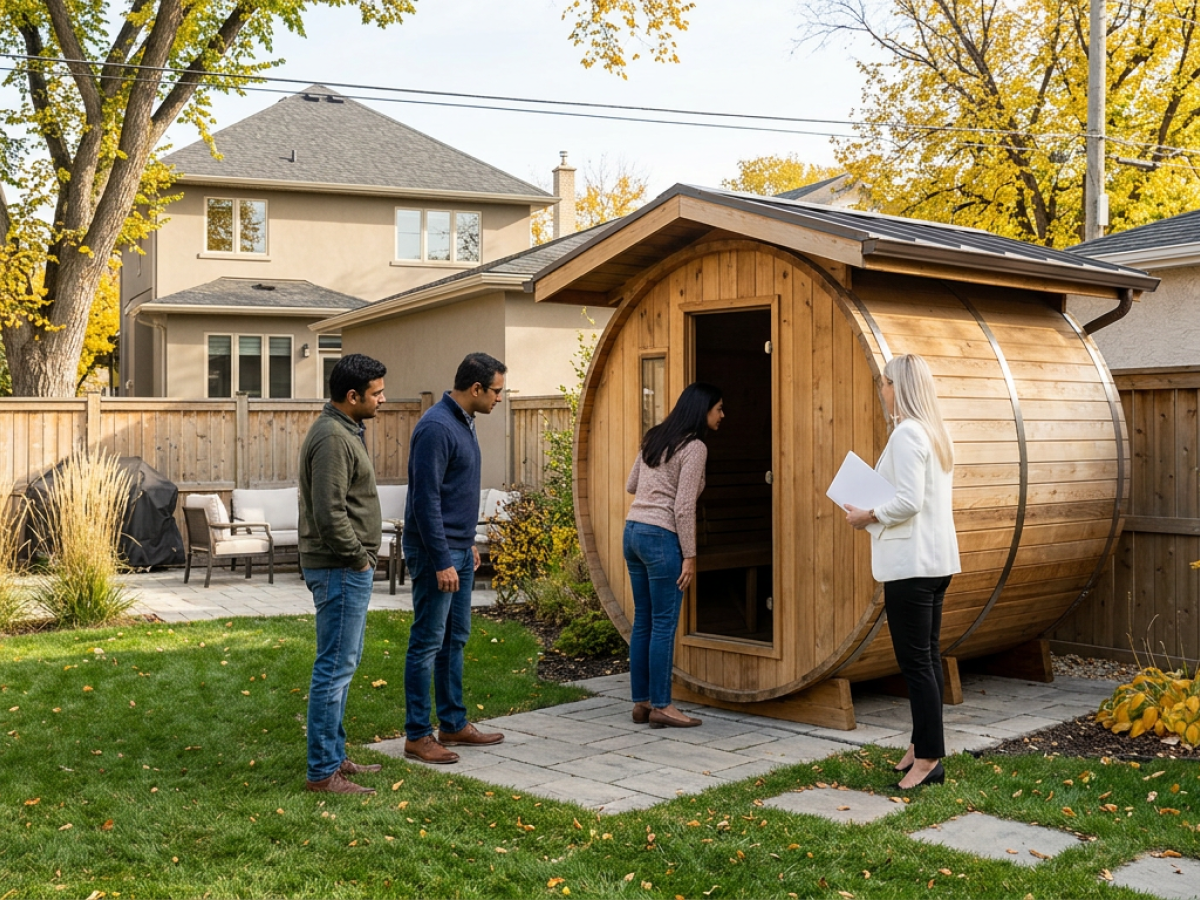
No builder should promise a sauna returns every dollar at resale. A barrel may appeal strongly to a buyer who likes the look, while another buyer might see it as a movable backyard product rather than a real property improvement. What it actually contributes at resale depends on its condition, installation quality, foundation, exterior appearance, the state of the heater and electrical, maintenance history, how naturally it fits the property, and simple demand from whoever's buying. A custom cabin, matched to the home, deck, and landscaping, tends to read as more permanent and architectural, which doesn't guarantee any specific appraisal number, but it can shift buyer perception toward "intentional part of the property" instead of "thing sitting on the lawn."
Who each one actually fits
A barrel makes sense if you want a lower initial cost, genuinely like the look, have a simple and accessible site, mostly need seated space for one or two people, don't need a full-length elevated bench, and are fine with ongoing wood and exterior maintenance plus coordinating your own installation and future service.
A custom insulated cabin tends to be the stronger choice if you want dependable year-round Manitoba use, care about elevated benches and lying-down space, need room for family or guests, want a vestibule, shower, plunge, or integrated deck, want the sauna to genuinely complement the home and landscaping, value local warranty and after-build support, and expect it to stay part of the property for decades.
The Turon view
We don't think barrel saunas are automatically a poor investment. A good one, set on a proper base and maintained correctly, can serve the right homeowner well. Our take is that premium Manitoba properties usually get more out of an insulated custom cabin, since it hands us more control over comfort, structure, insulation, ventilation, heater sizing, glass, moisture management, exterior durability, and how the whole thing fits the property around it. A barrel sauna is a simpler product at a lower entry point. A custom cabin is a full sauna environment built around the people using it and the winters it has to survive. For homeowners who care about that gap, the cabin is usually where the money's better spent.
